THz Drones: Unlocking Ultra-Fast Data for Swarm Coordination
New research tackles the complexities of Terahertz (THz) communication for multi-user drone systems, significantly reducing training overhead and boosting channel estimation accuracy. This paves the way for lag-free, high-bandwidth drone operations.
TL;DR: This paper introduces a new semi-blind channel estimation technique,
MU-WD-SB, designed for Terahertz multi-user massive MIMO systems. It significantly reduces the training data needed while improving channel knowledge accuracy, enabling more efficient and reliable high-speed data links for future drone applications.
Drone operations are pushing the limits of wireless communication. We're talking about high-fidelity video streams from multiple drones, real-time sensor data, and intricate swarm coordination – all demanding immense bandwidth and ultra-low latency. The problem is, current wireless tech like Wi-Fi or 5G struggles to deliver this consistently, especially in dense multi-user environments. This is where Terahertz (THz) communication steps in, promising speeds that dwarf your home internet connection and the capacity to handle vast networks of interconnected drones. The challenge, however, has always been making THz practical. This research from Garg et al. takes a significant step towards that reality by tackling the critical issue of reliable channel estimation in THz multi-user massive MIMO systems.
The Bottleneck: Knowing Your Channel
For any wireless system to perform optimally, it needs accurate Channel State Information (CSI) – essentially, a precise understanding of how the signal travels from transmitter to receiver. This includes accounting for reflections, absorption, and interference. In traditional systems, acquiring CSI often involves sending known 'pilot' signals, which takes up valuable transmission time, known as training overhead. For THz, this is even more critical because the signals are highly susceptible to molecular absorption (especially from water vapor) and suffer significant path loss. The environment is dynamic, especially with drones moving around, making accurate and rapid CSI acquisition a constant battle. Existing methods are often too slow, too power-hungry, or require too much dedicated training time, eating into the precious data rate that THz promises. This limits how many drones can communicate simultaneously and how quickly they can react to changing conditions.
A Smarter Way to Listen
This paper proposes a two-pronged approach to make THz communication for drones more viable. First, they developed a comprehensive THz channel model that realistically accounts for factors like molecular absorption, reflection losses, and even diffused multipath components – basically, all the nasty bits that distort a signal in the real world. This foundational model provides a solid basis for testing.
Then, the core innovation: a novel semi-blind channel state information (CSI) acquisition technique called MU-WD-SB (Multi-User Whitening Decorrelation Semi-Blind). Unlike purely training-based methods that rely solely on known pilot signals, MU-WD-SB is 'semi-blind' because it intelligently combines the information from those pilot signals with the statistical properties of the unknown data symbols themselves. Think of it as learning from both what you know for sure and making educated guesses about what you don't, based on the patterns. This hybrid approach is key to reducing the amount of dedicated training time required.
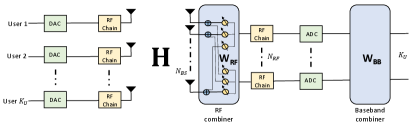
Figure 1: Block diagram of a MU THz massive MIMO system.
To further refine the system, the authors also devised a new hybrid receiver combiner framework for THz massive MIMO systems. This framework uses MMV-SBL (Multiple Measurement Vector based Sparse Bayesian Learning) and is designed to work effectively even with low-resolution analog-to-digital converters (ADCs). Low-resolution ADCs are critical for practical THz systems because they reduce hardware complexity, power consumption, and cost – all vital considerations for drone platforms. This combiner's main job is to reduce multi-user interference, ensuring each drone's signal is received clearly, even when many are transmitting at once.
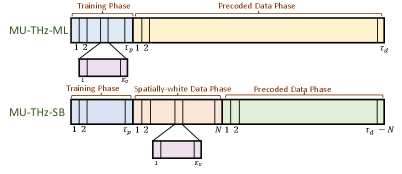
Figure 2: Frame structures of THz ML and SB channel estimation schemes
The Numbers Speak: Less Overhead, More Accuracy
The research rigorously evaluates MU-WD-SB against conventional training-based and other semi-blind techniques. The results are compelling. The proposed MU-WD-SB scheme consistently outperforms its counterparts across several key metrics:
- Normalized Mean Square Error (NMSE): The paper shows a significant reduction in NMSE, indicating a much more accurate estimation of the channel state. For instance, in various SNR scenarios,
MU-WD-SBoften achieves lower NMSE than traditional Maximum Likelihood (ML) or other semi-blind methods, especially at higher SNRs where the gains are more pronounced. This means the system has a clearer 'picture' of the wireless environment. - Bit Error Rate (BER): A lower BER means fewer data errors, leading to more reliable communication.
MU-WD-SBdemonstrates improved BER performance, translating directly into more robust data links for drones. - Spectral Efficiency (SE): This is about how much data can be squeezed into a given amount of spectrum. By reducing training overhead and improving channel estimation,
MU-WD-SBenhances spectral efficiency. This is crucial for supporting a high density of drones and high data rates simultaneously. The gains observed are substantial, indicating better utilization of the valuable THz spectrum.
These improvements come from the clever reduction in training overhead – effectively freeing up more time for actual data transmission rather than just 'listening' to the channel.
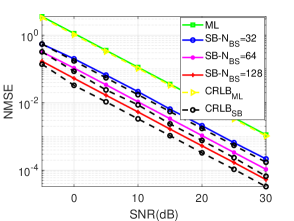
Figure 3: NMSE performance comparison of MU-WD-SB with other schemes, showing superior accuracy.
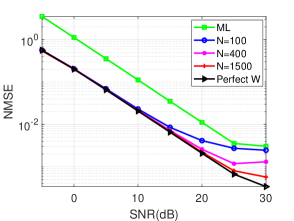
Figure 4: BER performance comparison, highlighting improved reliability of MU-WD-SB.
Why This Matters for Drones
This isn't just an academic exercise; it's a foundational step for future drone capabilities. This research paves the way for drone swarms operating with such precise coordination that individual units can perform complex, synchronized tasks in real-time, without any perceptible lag. This research makes that possible by providing the underlying communication efficiency:
- Real-time High-Fidelity Streaming: Drones could stream 8K video, 3D point cloud data from LiDAR, or high-resolution thermal imagery without compression artifacts or delays.
- Massive Swarm Coordination: With reduced training overhead and robust multi-user capabilities, hundreds or even thousands of drones could communicate simultaneously with a ground station or each other. This enables true collective intelligence, precise formation flying, and complex collaborative tasks like construction or disaster response.
- Augmented Reality/Virtual Reality Integration: Drones could become mobile data hubs for AR/VR applications, feeding real-time environmental data to headsets with imperceptible latency, creating truly immersive experiences for operators or field personnel.
- Precision Control and Teleoperation: Low latency and high data rates mean operators can control drones with surgical precision, even from vast distances, making complex maneuvers or delicate payload manipulation feasible.
This work fundamentally addresses the communication backbone needed to transition from current drone capabilities to truly autonomous, data-rich, and highly coordinated systems.
The Road Ahead: Limitations and Next Steps
While promising, this research, like any, has its limitations. THz communication itself faces inherent challenges:
- Short Range: THz signals have a much shorter effective range compared to lower frequency bands. This often necessitates line-of-sight (LOS) communication, which can be challenging in urban or obstructed environments. While the paper models multipath, reliance on LOS is often a practical constraint.
- Environmental Sensitivity: Molecular absorption, particularly from water vapor, means THz performance can degrade significantly in humid or rainy conditions. This impacts reliability in diverse weather.
- Hardware Complexity: Although the use of low-resolution ADCs helps, THz transceivers are still complex and expensive compared to current microwave/millimeter-wave components. Miniaturization and cost reduction are ongoing challenges for drone integration.
- Uplink Focus: The paper specifically focuses on the uplink (drone to base station). While crucial, efficient downlink communication is equally important for commanding and controlling drones, and may present different challenges.
Future work would need to address these issues, perhaps through intelligent relaying, dynamic beam steering to maintain LOS, and further innovations in compact, robust THz hardware.
Can You Build This at Home? Not Yet.
Replicating this research isn't a weekend project for the hobbyist. While the underlying concepts are elegant, the practical implementation requires highly specialized hardware. We're talking about custom-built THz transceivers, sophisticated antenna arrays for massive MIMO, and advanced signal processing capabilities. This isn't off-the-shelf Raspberry Pi or ESP32 territory. There's no immediately available open-source software or hardware that would allow a typical drone builder to implement MU-WD-SB or MMV-SBL for THz today. This is firmly in the realm of advanced academic and industrial R&D.
Echoes in the Data Stream
This research on THz communication fits into a broader trend of enabling ultra-high-bandwidth, low-latency applications. If drones are going to be generating and consuming massive amounts of data via THz, then efficient handling of that data becomes paramount. For instance, the work by Nawaz et al. on "WorldCache: Content-Aware Caching for Accelerated Video World Models" becomes incredibly relevant. With THz pipes delivering endless streams of high-fidelity video, WorldCache would be crucial for processing and understanding that data efficiently, whether on the ground or at the edge. Similarly, Yang et al.'s "VideoDetective: Clue Hunting via both Extrinsic Query and Intrinsic Relevance for Long Video Understanding" would be essential for extracting actionable intelligence from the long, high-resolution video streams that THz enables, allowing systems to quickly identify critical events or objects. Finally, for sophisticated drone swarm autonomy, where natural language instructions drive precise 3D manipulation, the kind of structured reasoning enabled by research like Zhen et al.'s "3D-Layout-R1: Structured Reasoning for Language-Instructed Spatial Editing" would rely entirely on the ultra-fast and reliable communication backbone that this THz research is building. The faster and more reliable the pipe, the smarter and more capable the drone applications can be.
This research is a tangible step towards a future where drones aren't just flying cameras, but truly intelligent, interconnected agents capable of tasks that demand instantaneous, data-rich communication.
Paper Details
Title: Semi-Blind Channel Estimation and Hybrid Receiver Beamforming in the Tera-Hertz Multi-User Massive MIMO Uplink Authors: Abhisha Garg, Suraj Srivastava, Varsha Dubey, Aditya Jagannatham, Lajos Hanzo Published: Unpublished (arXiv pre-print) arXiv: 2603.22258 | PDF
Written by
Mini Drone Shop AISharing knowledge about drones and aerial technology.