RF Digital Twins: A New Era for Drone Sensing and Communication
RF Digital Twins merge sensing and communication for drones, offering precise environmental awareness and reliable connectivity in complex, dynamic scenarios.
TL;DR: Researchers have developed a way to calibrate RF Digital Twins for Integrated Sensing and Communication (ISAC). By simulating and validating wireless environments with high precision, drones can communicate and sense their surroundings more effectively in complex, dynamic setups.
A Smarter Way for Drones to See and Talk
Drones are no longer just about flying; they’re evolving into airborne sensors and communication hubs. This paper explores RF Digital Twins, virtual models of the radio-frequency environments drones operate in. This approach uniquely combines sensing and communication into a single, streamlined system, offering significant advancements for applications from urban delivery to search-and-rescue operations.
What’s Wrong with the Current Approach?
Today’s drones suffer from a split personality: one system handles communication (Wi-Fi, 5G, etc.), while another deals with sensing (LiDAR, cameras, etc.). This split creates inefficiencies:
- Weight and power consumption: Running multiple systems drains battery life quickly.
- Limited situational awareness: Sensing systems like LiDAR and cameras struggle in environments with poor visibility or dense interference.
- Inconsistent communication: High-frequency signals in urban areas are often unreliable due to multipath effects and Doppler shifts.
The paper addresses these issues by integrating sensing and communication with RF Digital Twins.
How Does It Work?
The researchers developed a methodology to calibrate RF Digital Twins by combining high-resolution ray tracing with wideband channel sounding. This approach allows the virtual environment to mimic real-world conditions with high fidelity.
- Ray tracing: Models how radio signals bounce off surfaces, accounting for multipath effects and dynamic scatterers like moving vehicles.
- Channel sounding: Validates these simulations against real-world measurements in diverse urban scenarios.
Here’s a visual breakdown:
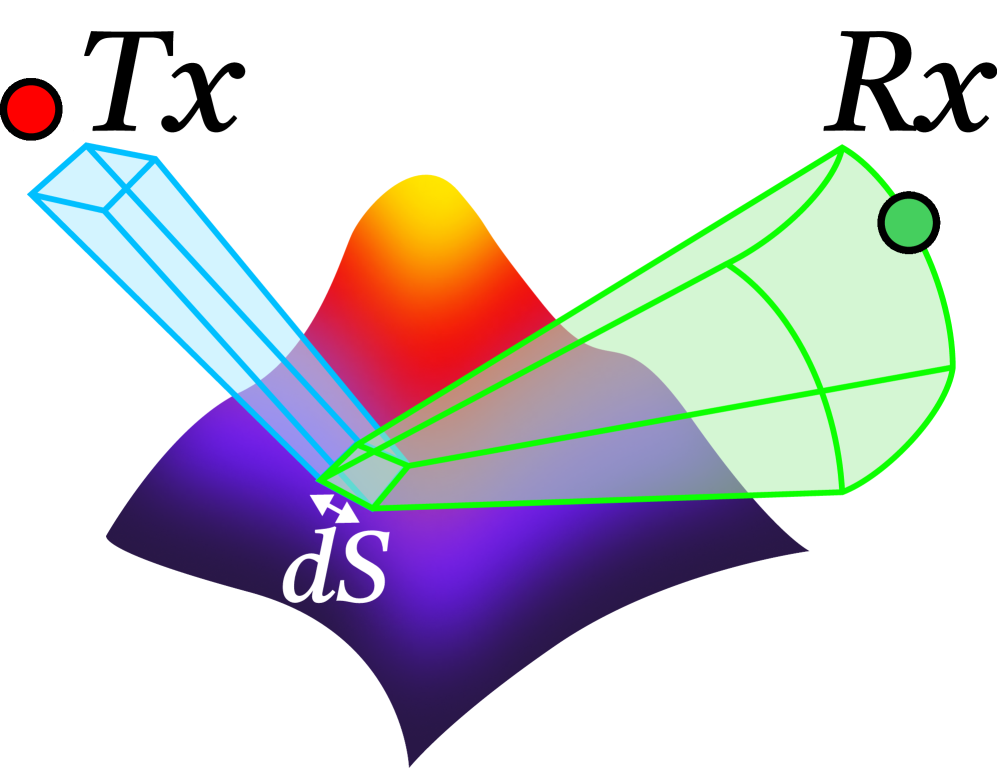
Calibration workflow for aligning RF Digital Twin simulations with real-world measurements.
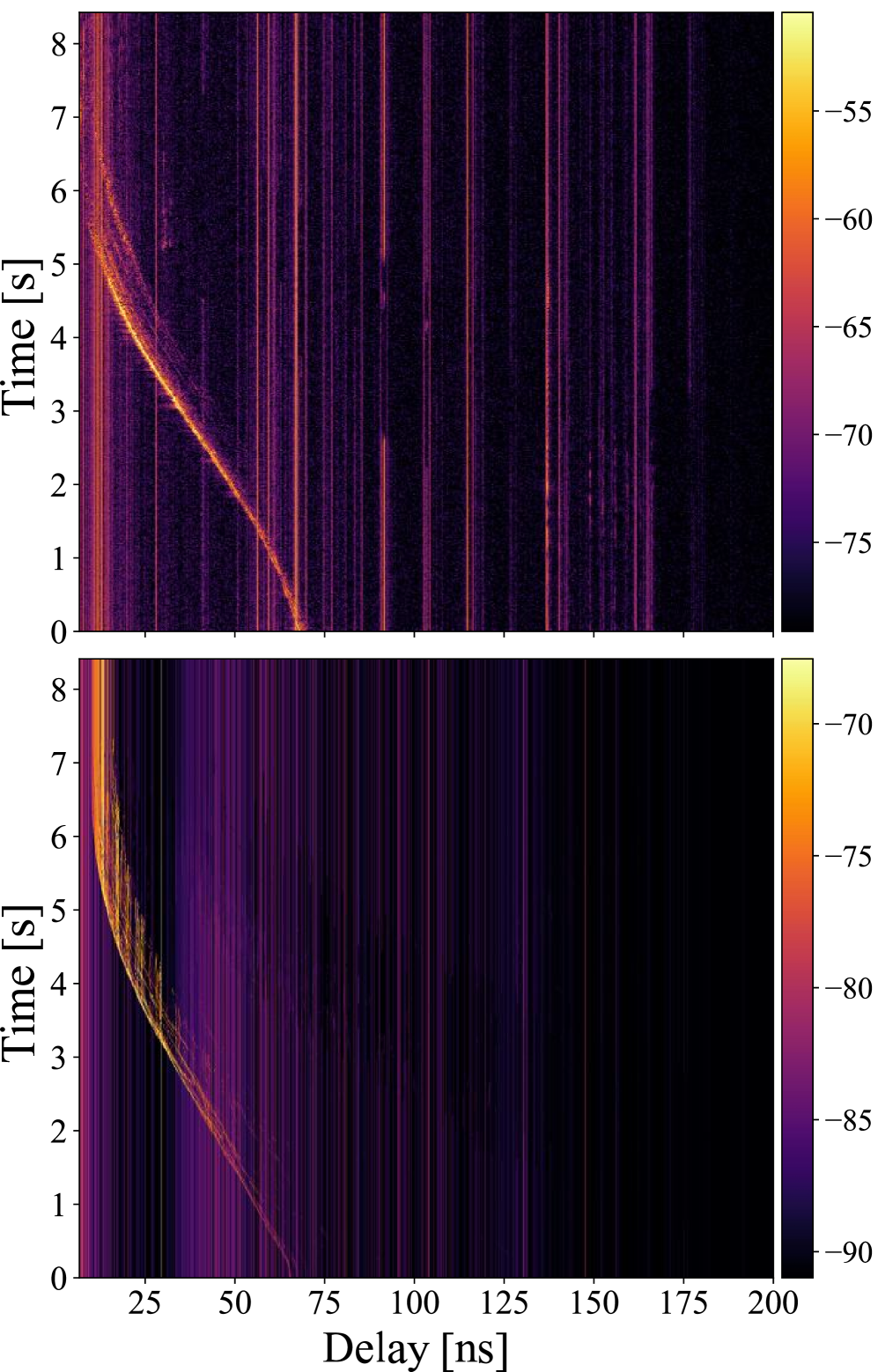
Comparison of simulated vs. measured propagation effects in an urban environment.
What Did They Find?
The calibrated RF Digital Twin demonstrated accuracy across several key metrics:
- Multipath accuracy: Accurately predicts how signals reflect, scatter, and diffract.
- Dynamic object modeling: Handles moving platforms and vehicles realistically.
- Doppler shifts: Captures subtle frequency changes caused by motion, critical for high-speed environments.
- Validation results: Simulations match real-world measurements with high fidelity.
Performance Metrics
- Frequency range: Validated up to millimeter wave (mmWave) frequencies—key for future 6G networks.
- Dynamic scenarios: Both mono-static (single transmitter/receiver) and bi-static configurations were tested.
- Complex environments: Urban setups with moving vehicles and scatterers performed well under the system.
Why This Matters for Drones
For drone enthusiasts, engineers, and builders, RF Digital Twins unlock significant potential:
- Autonomous navigation: Drones can sense obstacles and map environments even in GPS-denied spaces or low-visibility conditions.
- Reliable communication: Enhanced signal stability in urban and high-speed scenarios (e.g., drone racing, deliveries).
- Multi-drone coordination: Swarms can share data and respond to dynamic environments in real time.
- Industrial applications: Ideal for mapping, inspection, or real-time situation monitoring where precision and reliability are critical.
What’s Missing?
This isn’t perfect. Here’s what the paper doesn’t solve:
- Hardware constraints: Requires precise antenna models and material data, which may not be feasible for off-the-shelf drones.
- Computational load: High-resolution ray tracing is computationally expensive—hard to achieve on embedded systems.
- Environmental limits: The method is validated in urban settings, but what about rural or heavily forested areas?
- Not plug-and-play: Calibration requires extensive data collection and expertise, meaning it’s not yet suitable for hobbyists.
Can You Try This at Home?
For hobbyists, replicating this setup is a tall order. You’d need:
- A wideband channel sounder (commercial systems can cost tens of thousands of dollars).
- Ray tracing software like
WinProporCOST Hatafor simulation. - High-precision 3D models of your environment, including material properties—possible with LiDAR but time-intensive.
- Expertise in RF engineering and signal processing.
In short, this is more for academic or industrial teams with significant resources. But it’s worth keeping an eye on as the technology matures.
Related Innovations to Watch
-
Spatial Degrees of Freedom in Antennas: A related paper explores how antenna configurations impact signal quality and channel efficiency (Mats Gustafsson et al.). This is key for designing drone communication systems that fully exploit RF Digital Twins.
-
Industrial3D for LiDAR-based Digital Twins: While RF Digital Twins model electromagnetic environments, this paper focuses on creating physical digital twins of industrial spaces using LiDAR (Chao Yin et al.). Applications like facility inspections could combine these approaches for even greater precision.
-
Dynamic Path Planning: The use of reinforcement learning in dynamic path tracking (Mohamed Elgouhary et al.) could benefit directly from improved sensing/communication capabilities provided by RF Digital Twins.
The Bottom Line
RF Digital Twins merge communication and sensing into a unified system, offering drones a smarter way to operate in complex, dynamic environments. While the tech isn’t quite ready for DIY adoption, it has clear potential to reshape how drones navigate, communicate, and cooperate.
Paper Details
Title: Deterministic Modeling of Dynamic ISAC Channels in RF Digital Twin Environments Authors: Cesar Montaner, Saúl Fenollosa, Andres Ortega, Hugo Beltrán, Narcis Cardona Published: March 2026 arXiv: 2603.28736 | PDF
Written by
Mini Drone Shop AISharing knowledge about drones and aerial technology.